Share This With a Friend

Showing posts with label apples. Show all posts

Saturday, October 17, 2009

It’s Apple pickin’ time: The definitive guide to pick-your-own apples nationwide Conclusion with recipe


Once you bring your apples home from the orchard, there are numerous recipes and uses for them - everything from pies and dumplings, to confections.

The following is one of the more unique choices that will bring back thoughts of summer on a cold and snowy day.

APPLE WALNUT CONSERVE

3 pounds of apples should yield about 4-1/2 cups chopped
1/2 cup water
1/4 cup lemon juice
1/2 cup raisins
1 package powdered pectin
5 1/2 cups sugar
1/2 cup chopped walnuts
2 to 3 drops red food coloring (optional) or a bit of cinnamon for taste and mild color (also optional)
Clean and core apples, leaving skin on. Chop or dice apples to about ¼ to ½ inch pieces to equal 4-1/2 cups. Combine chopped apples, water, lemon juice, and raisins in a large kettle. Add pectin stirring well. Place over high heat. Stirring constantly, bring quickly to a full boil with bubbles over the entire surface. Add sugar; continue stirring, and bring to a full bubbling boil. Boil hard for 1 minute, stirring constantly. Add walnuts. (Add red food coloring if desired.) Remove from heat and pour immediately into hot, sterilized canning jars, leaving 1/4-inch headspace. Seal jars and process for 5 minutes in boiling-water bath. Makes 6 to 7 half-pint jars. Awesome with warm buttered toast and English muffins or as a relish to poultry, or boiled beef. ENJOY!

What about you, what’s your favorite recipe for apples? Please feel free to share!

Thursday, October 15, 2009

It’s Apple pickin’ time: The definitive guide to pick-your-own apples nationwide Part 3- The Who, What, Where When and How of Apple Picking


Most pick-your-own orchards provide containers but it’s always a good idea to ask if you need to bring your own, and if there is a minimum harvest required along with method of payment.


Pickyourown.org. is a great resource for finding the nearest location nationwide for pick-your-own apples They also cover international locations such as: Canada, Britain, Australia, New Zealand, South Africa and many other countries.


In planning your excursion, be sure to check out availability of specific apple varieties, as ripening and harvest times will vary.


Also, ask about unique features that many of the orchards offer such as baked goods, jellies and apple specialty items, as many maintain gift shops in addition to family friendly children’s activities.


Dress in layers as fall weather can be unpredictable and wear comfortable walking shoes.


When picking apples, gently pull and twist simultaneously. If you get two apples next to each other on the same branch, gently pull both at the same time but twist each in the opposite direction.


When you bring your harvest home, remember that apples do best stored in a cool (35 to 45 degrees) dry place, with lower light, but if they need to ripen, room temperature is the answer.


- HAPPY PICKIN’- Check back tomorrow for a special recipe for your harvest.

Wednesday, October 14, 2009

It’s Apple pickin’ time: The definitive guide to pick-your-own apples nationwide Part 2 – What’s Your Favorite Variety?


Always remember, the best variety of apple is the one that appeals to your individual taste.

The following is a list of apples and their characteristics. Just click on the name of the apple variety for a picture.

Arkansas Black: Harvested later in the season; dark purple to almost black in color; medium to large size fruit with hard texture; stores well and is great for baking.

Braeburn: Another later seasoned fruit; yellow base color with orange/red blush and red stripes; originated in New Zealand in 1952; medium to large fruit with cream colored crisp, juicy, slightly tart flesh that stores well.

Cortland: Sept. through early October harvest; a purple hued dull red apple with white soft flesh; it is a McIntosh cross with less aromatic properties; keeps well and is excellent in salads.

Empire: Another McIntosh hybrid crossed with Red Delicious; originally introduced in New York State in 1966; dark red with creamy white flesh that is juicy with a slight acidity; most enjoyable eaten when fresh but keeps well for a long period of time; also great for desserts and cider; often available starting in October.

Gala: An early season harvest originally developed in New Zealand; a heart-shaped fruit with yellow and red stripes; aromatic and sweet tasting; small to medium in size fruit; makes wonderful applesauce, good in salads, and eating fresh picked.

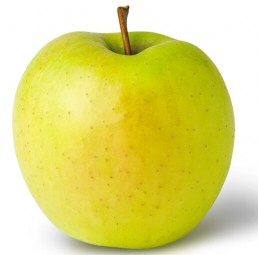
Golden Delicious: An old-time favorite introduced in West Virginia in 1900; generally mid to late Sept. harvest; large yellow-gold fruit with tender skin; has crisp, firm sweet and flavorful flesh; works well in salads and blended in applesauce; requires careful picking as it can easily bruise.

Honeycrisp: A medium to large sized, red over light greenish/yellow apple sometimes covered with flecks of reddish/brown; juicy, sweet, aromatic, and crisp; harvested mostly in Sept. it was first introduced in Minnesota and makes excellent eating and apple juice.

Jonathan: A medium sized fruit with a tart yet sweet taste; developed in New York State in 1896; tougher red over greenish/yellow skin; one of the first apples in the fall and a long-time favorite for eating and cooking.

Jonagold: A cross between Golden Delicious and Jonathan developed in 1968; a large red over yellow apple with crackling, firm slightly tart full flavor; stores well under refrigeration; harvested mid to late Sept.; works well for pies, salads, baking, sauce and snacks.

Liberty: A highly disease-resistant McIntosh-type apple developed in New York State in 1962; a large fruit, red over yellow; great for eating, sauce salads and desserts; flavor heightens when stored.

Macoun: Was developed in 1909 but not introduced to the general market until 1950; size and shape similar to McIntosh but with deeper red coloring and more strip variations; a very sweet, aromatic and firm fleshed fruit known as the New England Dessert apple but also great for eating, salads and sauces; harvest begins in Sept.

McIntosh: An old-time American favorite since 1811; mild and sweet flavor that’s great for eating, salads and as an applesauce blend; harvested at the beginning of Sept. to Oct.

Mutsu: A sweet crisp, greenish-yellow apple, similar to the Golden Delicious it was developed in Japan in 1930; it’s great for fresh eating and applesauce and is generally available the beginning of October.

Paula Red: A tart-tasting apple with creamy light flesh; one of the first-of-the-season varieties to be harvested; small to medium in size, it developed as a mutation of the McIntosh; bright red fruit over yellow with a dusty-sheen appearance; not overly sweet or tart suitable for eating and cooking when softness is desired.

Red Delicious: For years was the most popular apple in the world; great for eating, salads and applesauce; bright to deep dark crimson skin with fine-grained white flesh; sweet simple flavor with refreshing slight acidity; harvested in mid to late Sept. and excellent for eating, salads and applesauce; harvested later in the season.

Suncrisp: Harvested mid to late Oct; a Golden Delicious-type; red over orange colored, hard fruit that keeps well and best for baking.

Vista Bella: A medium sized, dark red over yellowish-green skin; light and juicy flesh akin in flavor to early raspberries; fine eating apple.

Come back tomorrow for the “who, what, where, when and how” of apple picking.

Tuesday, October 13, 2009

It’s Apple pickin’ time: The definitive guide to pick-your-own apples nationwide Part 1- A Little Bit of History


Long before 1792, when John Chapman (also known as “Johnny Appleseed”) left his Leominster, Massachusetts home to make his way westward planting apple orchards, the fruit had arrived with the settlers of the Massachusetts Bay Colony.


The history of the apple, a member of the rose family, stretches its origins even further to an area somewhere between the Caspian and the Black Sea more than 6500 years ago.


Historically it was considered a favorite fruit by the ancient Greeks and Romans and today there are at least 7500 varieties grown worldwide, with some 2500 varieties available in the United States alone.


One of the most healthful of all foods, the apple is fat, sodium, and cholesterol free as well as a great source of the fiber, and only about 80 calories for a medium sized fruit.


Now that it’s harvest time, there are many varieties of apple that are available at orchards and farms nationwide, which are beckoning for folks to “pick your own.”


Come back and visit tomorrow as I highlight some fairly common and unusual varieties.